What lies on the seabed doesn't clean itself. Stichting Duik de Noordzee Schoon sends volunteer divers to the bottom of the North Sea to retrieve lost fishing nets, lead weights and other debris. They've been doing it for over ten years, entirely on a voluntary basis.
Agriculture & Soil

Stichting Duik de Noordzee Schoon (DDNZS) was founded on 22 November 2012, born from a group of experienced North Sea wreck divers who saw the state of the seabed and decided to act. What began as a private initiative has grown into a professional foundation with a large network of volunteers, marine biologists, underwater archaeologists, filmmakers and other experts.
DDNZS works through three pillars: discover, clean up and protect. They dive on shipwrecks, natural reefs like the Klaverbank, and locations such as the Doggersbank and the Wadden Sea. They document what they find, remove what is harmful to marine life, and advocate for the protection of special locations and wrecks.
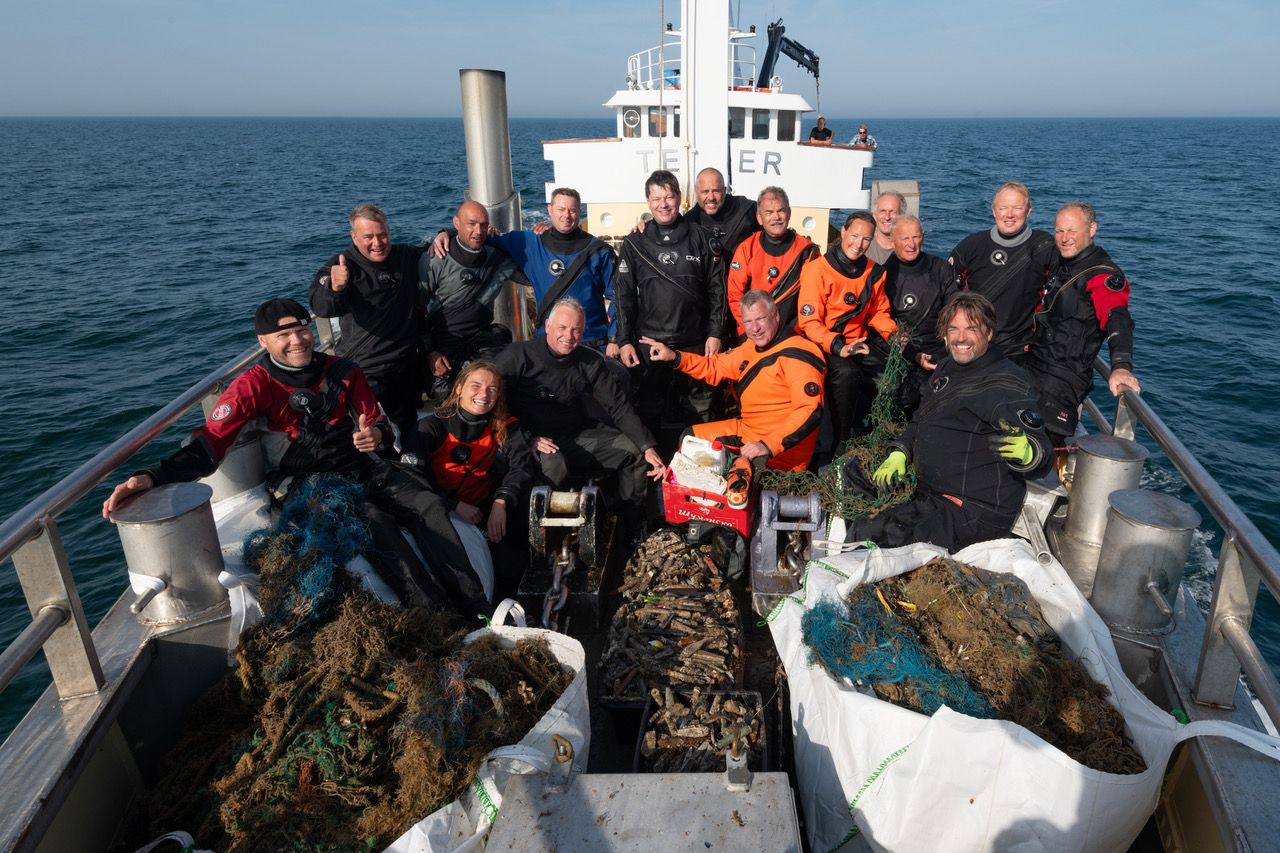
To date, more than 28 expeditions have been organized, collectively removing over 115,000 kilos of waste from the seabed. This includes ghost nets, fishing lead weights, artificial bait and container debris from the MSC Zoë disaster.
What DDNZS does:
Organizes expeditions to the North Sea to remove waste from the seabed
Retrieves ghost nets, lead weights and other harmful debris
Conducts and publishes ecological and archaeological research
Raises awareness of the North Sea as a unique and vulnerable ecosystem
Documents and advocates for the protection of shipwrecks and special locations
DDNZS has no paid staff. Everything runs on volunteers who also cover a significant portion of expedition costs themselves. That says everything about their commitment.
The North Sea is one of the world's most trafficked and exploited seas. What happens underwater is invisible to most people. But what's happening there affects all of us.
Ghost nets keep fishing long after they're lost
Lost fishing nets, known as ghost nets, drift and lie on the seabed for years, even decades. They trap fish, seals and other animals that have no way out. A decomposing net remains harmful until it is physically retrieved. That is exactly what DDNZS does.
Debris doesn't disappear on its own
Lead weights, artificial bait, container debris and other material that reaches the seabed slowly breaks down into microplastics and other substances that damage the ecosystem. The North Sea needs hands under water. Literally.
An invisible ecosystem needs visible defenders
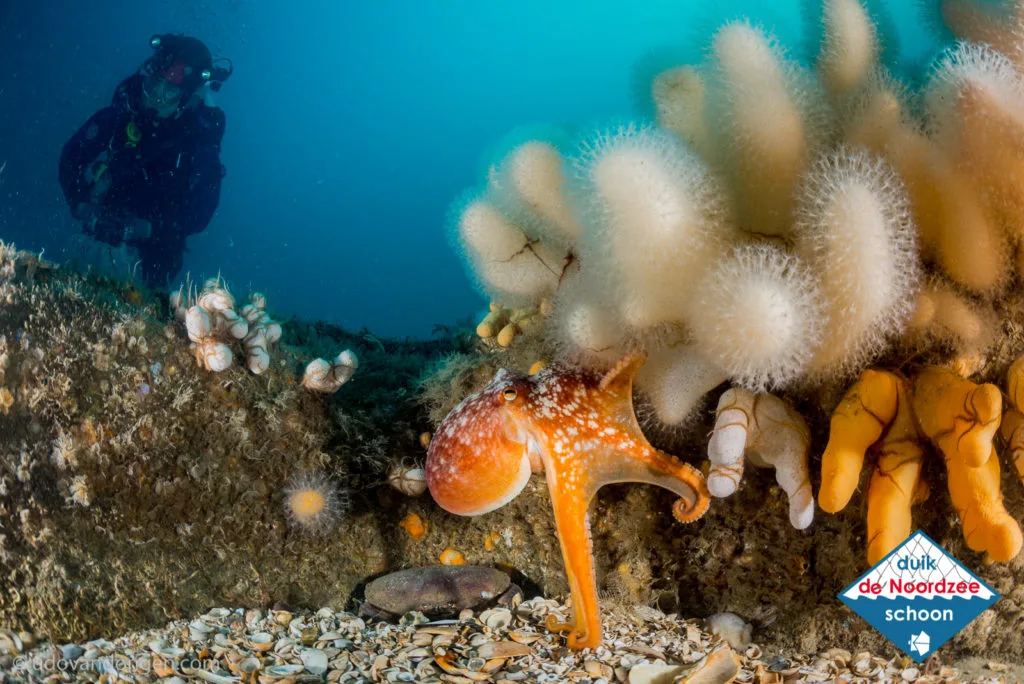
The wrecks in the North Sea are biodiversity hotspots, home to rare animals and plants. But they're also exposed to damage, illegal salvage of lead and unregulated activities. DDNZS makes these places visible, documents them and advocates for their protection.
A clean North Sea is not a given. It's the result of people dedicating their free time, diving equipment and expertise to something bigger than themselves.


Through Terry, your purchase at a participating store generates a donation to Dive the North Sea Clean from that store's marketing budget. You pay nothing extra.
Where your contribution goes:
Hiring a dive vessel with crew and a standby boat with skipper
Collective equipment on board: compressor, AED, oxygen kit, lines, buoys, anchors and repair materials
Logistics and expedition preparation
Documentation, publications and sharing of research findings
The divers bring their own diving equipment and personally cover a significant portion of costs. The contribution through Terry goes directly to expedition execution. Every euro helps.
In September 2024, an expedition departed to the Wadden Sea. What the divers found on the seabed was a mix of lost fishing gear, ghost nets and remarkable ecology. They brought up over 2.5 tonnes of fishing nets on a single expedition.
On one of the explored wrecks, two species were discovered that had never previously been recorded at that location. Every wreck is an island in the plain: a reef of biodiversity in the middle of an otherwise flat seabed. Those discoveries are exactly why DDNZS documents and researches as well as cleaning up.
Earlier expeditions removed parts of the debris that washed onto the Wadden Islands seabed following the MSC Zoë disaster in 2019. Waste that, without intervention, would have remained on the bottom for decades.
DDNZS collaborates with the Dutch Underwater Sports Federation (NOB), Rijkswaterstaat, provincial authorities, marine biologists and other organisations committed to the North Sea. Their findings are published in scientific journals and shared widely.
Your support through Terry does more than just the direct donation:
Every expedition generates data for scientific research on the health of the North Sea
The documentaries and photos DDNZS shares reach audiences who have never seen the North Sea from below
More expeditions means more waste removed and fewer ghost nets continuing to fish for years
DDNZS makes volunteer diving visible as a serious contribution to ocean conservation
Stichting Duik de Noordzee Schoon was founded on 22 November 2012 and holds ANBI status (Public Benefit Organisation), recognised by the Dutch tax authority. Chamber of Commerce number: 56558236. The foundation banks with Triodos Bank.
The foundation has no paid staff. Volunteers carry out all activities and personally cover a significant share of costs. Annual financial statements are publicly available on the foundation's website.
Where the donation goes:
Vessel and boat hire for expeditions
Collective equipment on board (safety equipment, debris removal gear)
Coordination, logistics and communications

Support Duik de Noordzee Schoon with every purchase
Shop as usual and let your purchase contribute to a North Sea that is a little cleaner than yesterday.