Eyes on the seabed: fifteen years of keeping the North Sea clean
An update from Stichting Duik de Noordzee Schoon
Published
Topic
Terry Insights

Eyes on the seabed: fifteen years of keeping the North Sea clean
An update from Stichting Duik de Noordzee Schoon, one of the Missions you can support on Terry.
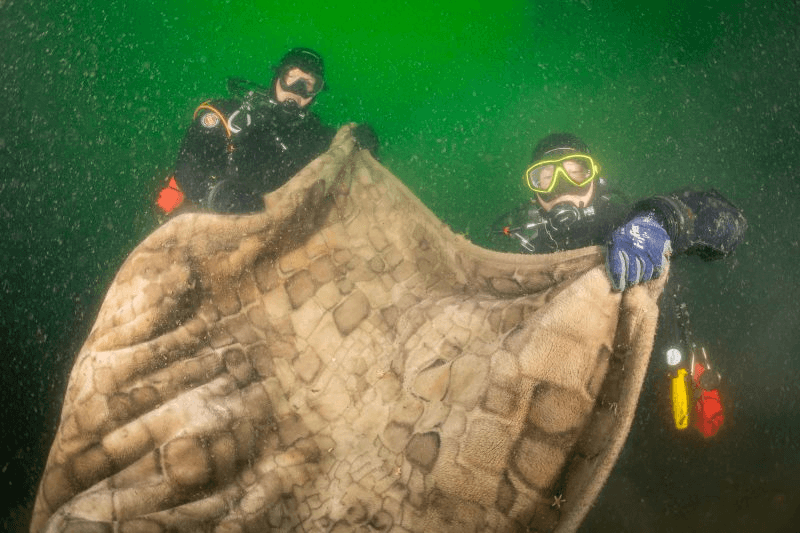
Rugs. Bathrobes. Fleece blankets. Not the things you would expect to find at the bottom of the North Sea, and yet that is exactly what a team of volunteer divers brought back to the surface this summer.
During its thirtieth expedition, Stichting Duik de Noordzee Schoon (Dive the North Sea Clean) once again recovered large amounts of waste from the seabed above the Wadden Islands, an area that forms part of the UNESCO World Heritage. Alongside the household items, the divers hauled up fishing gear, abandoned lobster cages, and thirteen big bags full of nets. The expedition marked the foundation's fifteenth anniversary, and it made one thing painfully clear: the seabed is still far from clean.
The people who actually go down there
The volunteers of Duik de Noordzee Schoon are among the very few who regularly reach the floor of the North Sea. That gives their work a rare double value. On every dive they remove waste, and they also record what they see: the animals and plants living on shipwrecks and across the surrounding seabed.
This time the observations were striking. Not every lobster they found was in good condition. They spotted unusually large numbers of dwarf squid eggs and sea snails, while other fish species were barely present at all. According to Renate Olie, a marine ecologist at Stichting De Noordzee, gathering these observations at the same locations year after year builds a uniquely valuable picture of how life on the seabed is changing over time.
As founder and expedition leader Ben Stiefelhagen sees it, each dive does two things at once. It clears waste, and it makes a hidden problem visible. As long as his divers keep finding this material, the problem is clearly still with us.

Why the work is far from finished
Part of what the divers keep encountering traces back to January 2019, when the container ship MSC Zoe lost 342 containers above the Wadden Islands. After the government ended the seabed salvage operation, an estimated 800,000 kilograms of waste was left behind on the bottom of the sea.
Since 2021, Duik de Noordzee Schoon has been part of CleanUpXL, a program run by the Waddenvereniging and Stichting De Noordzee. Together with their salvage partners, the effort has removed more than 430,000 kilograms of waste so far. But 2026 is the program's final year, and this anniversary expedition shows the job is not done.
There is a harder question underneath all of this. Since the end of 2025, European rules state that the amount of waste on the seabed may not increase any further. Yet there is still no full picture of how much is actually down there, and no structural obligation to clean it up. The divers cannot keep carrying this on volunteer effort and temporary projects alone. After fifteen years and thirty expeditions, the real question is no longer whether waste remains on the seabed, but who will take responsibility for clearing it, structurally and for the long term.

Structural work needs structural support
That word, structural, is exactly where a tool like Terry can help.
Work like this cannot depend on one-off campaigns or the occasional donation. It needs a steady, recurring stream of support that shows up year after year, the same way the divers do. That is what Terry is built for. Terry is not a one-time action. It turns everyday online purchases into ongoing support for the Mission you choose.
Duik de Noordzee Schoon is one of those Missions. The next time you are buying something online anyway, your purchase can help fund the boats, the equipment, and the expeditions that keep eyes on the seabed. The stores pay a marketing commission they would have spent regardless, and it costs you nothing extra. You simply shop the way you already do, and decide that it should mean a little more.
Fifteen years in, the divers keep going down. With steady support behind them, they can keep doing it for many more, and keep bringing what is hidden back up to where the rest of us can finally see it.
Read the foundation's full expedition update on the Duik de Noordzee Schoon website.
Images: © Joost van Uffelen